

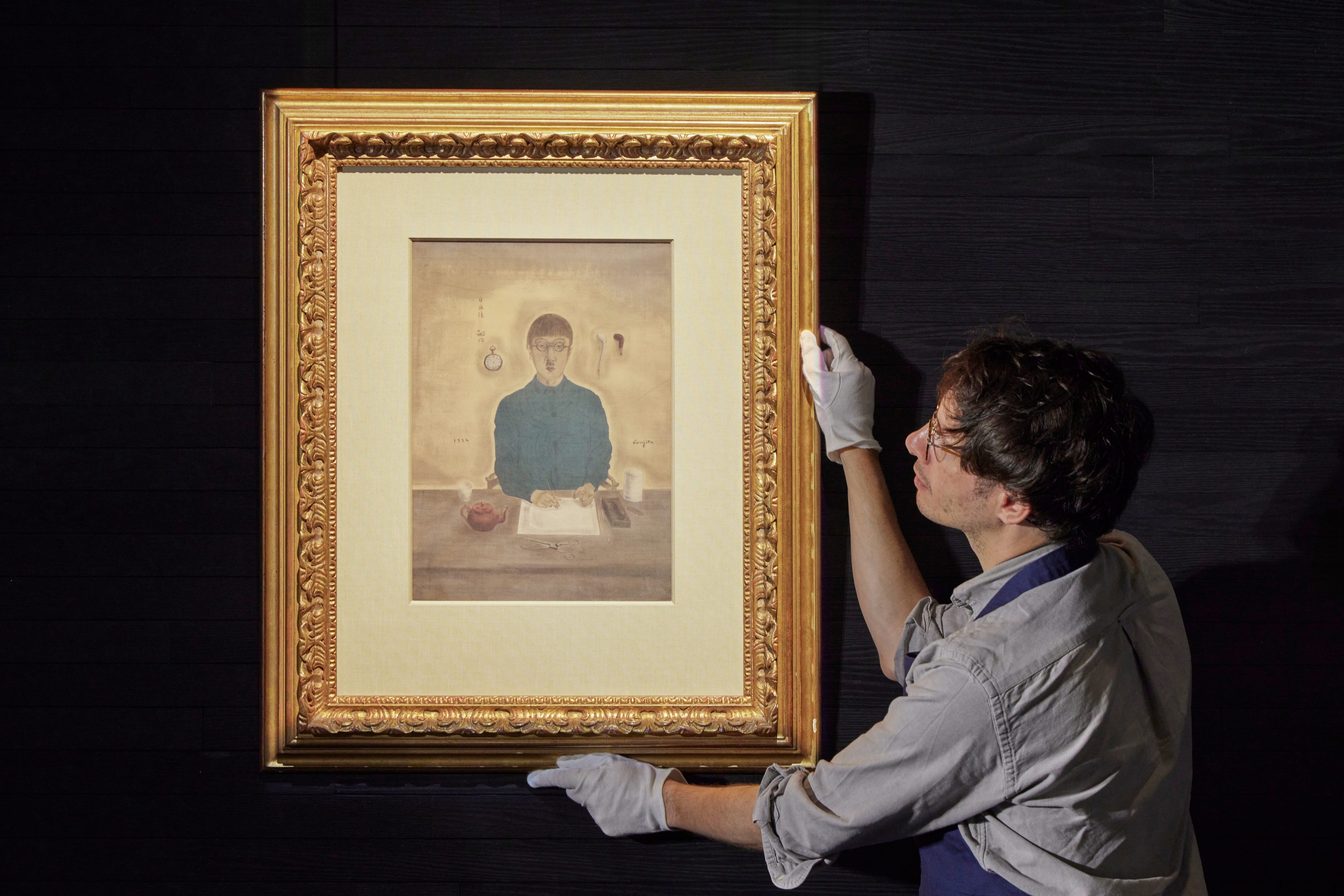
This story was originally published on art market data platform Arthur Analytics on September 30, 2026.
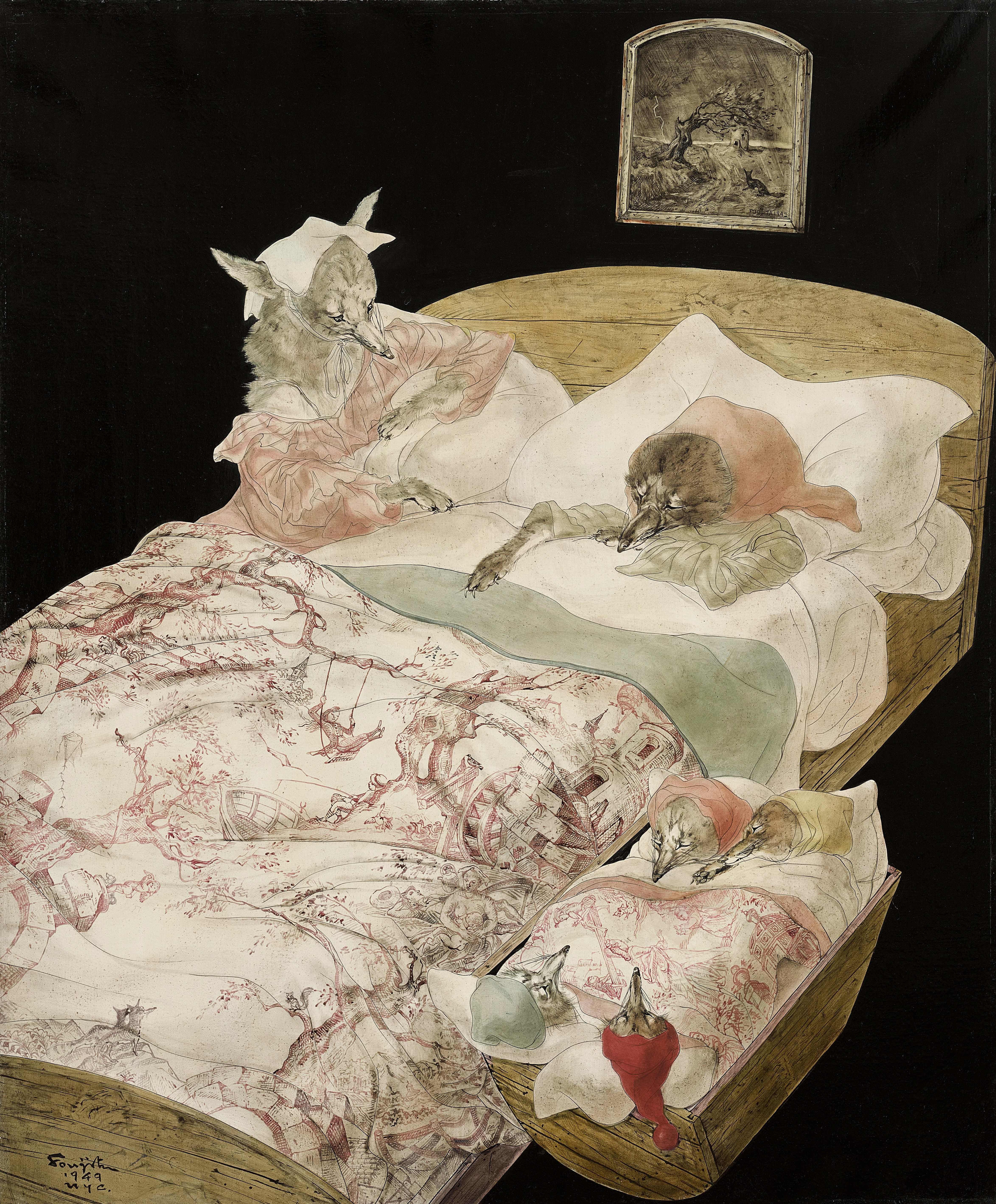
Sotheby’s strategy to bring a prestigious trove of Léonard Tsuguharu Foujita’s art to Hong Kong paid off splendidly. The Foujita Lexicon: Works from the Lewis Collection sold all 15 lots on Monday at the house’s Maison in Central, bringing HK$67.2 million ($8.7 million) after fees. The hammer total of HK$52.8 million ($6.7 million) was more than three times the presale low estimate of HK$16.5 million ($2 million). Top lot Le rêve (Hommage à La Fontaine) (1949) hammered at HK$21 million (approximately $2.68 million) after a five-way bidding war, over five times its presale low estimate, before selling for HK$26.5 million ($3.4 million) with fees.
While modest in scale—and short of Foujita’s £7 million ($9.38 million) auction record set in 2018 for La fête d’anniversaire (1949) at Bonhams London—the single-artist sale, Sotheby’s first for Foujita in Asia, demonstrated strong room enthusiasm. The results hint at unmapped market potential for the 20th-century Japanese master and his cross-cultural peers.
“Foujita is particularly interesting because he occupies a genuine intersection between Asian and Western art history,” said art advisor Gladys Lin, who attended the Hong Kong previews. Paired with strong Western provenance like the Lewis Collection, she noted, the artist offers a highly relevant narrative for cross-cultural collecting.
Journeying Between East and West
The foundation for this enduring appeal was laid early in Foujita’s career. Born in Tokyo in 1886, he moved to France in 1913 after studying Western-style painting in Japan. His synthesis of Eastern sensibilities and Western technique earned him acclaim within the École de Paris, where his enigmatic cats and female figures on signature “milky white” grounds captivated the Montparnasse circle alongside Amedeo Modigliani, Pablo Picasso, Diego Rivera, and Fernand Léger.
“He was part of the history of the École de Paris itself, not simply an Asian artist validated by the West,” Lin added. “That gives him a position legible both within Japanese Modern art and European Modernism.”
Following extensive travels, two World Wars, and controversy surrounding his war paintings, Foujita left Japan permanently in 1949. He became a French citizen in 1957 and died in Zurich in 1968 at age 81.
Foujita’s market peaked early in the late 1980s during Japan’s economic bubble, then cooled down following the market correction.
The 15 works at the Sotheby’s Hong Kong sale span 1914 to 1953, encompassing early Paris periods, 1920s figurative pieces, 1930s compositions, and postwar output. All were acquired at auction by British billionaire Joe Lewis and his daughter Vivienne between 1992 and 2018, coinciding with a broader international resurgence in demand.
The Top Lots
Offering the Lewis Collection in Hong Kong followed strong Asian participation in Sotheby’s London sale in June, where Asian buyers bid on half of the lots and bought one-third of them. Asian buyers accounted for 85% of bidders on Foujita at Sotheby’s over the past three years.
The auction total reached 2.3 times the works’ combined previous auction prices. Bids came from across Asia, Europe, and Latin America, according to Evelyn Lin, Sotheby’s chairman of Modern and contemporary art, Asia.
“Foujita appeals to a global collector base that values artists occupying important places in both Asian and Western art histories,” Evelyn Lin said.
Japan’s Musée Ando à Karuizawa bought the top two lots, while seven other works are slated for display at a summer 2028 Foujita exhibition at the Clark Art Institute in Massachusetts.
Founded in 2022 by Japanese financier Yasushi Ando and his wife, Megumi, the private museum holds over 200 works by the artist. Its top acquisition, Le rêve (Hommage à La Fontaine), nearly quadrupled in value over a decade to become the fifth most expensive Foujita work sold at auction, surpassing Portrait d’Hélène Franck (1924), which fetched ¥506,000,000 ($3,190,149) at SBI Art Auction in Tokyo in March, according to Arthur Analytics.
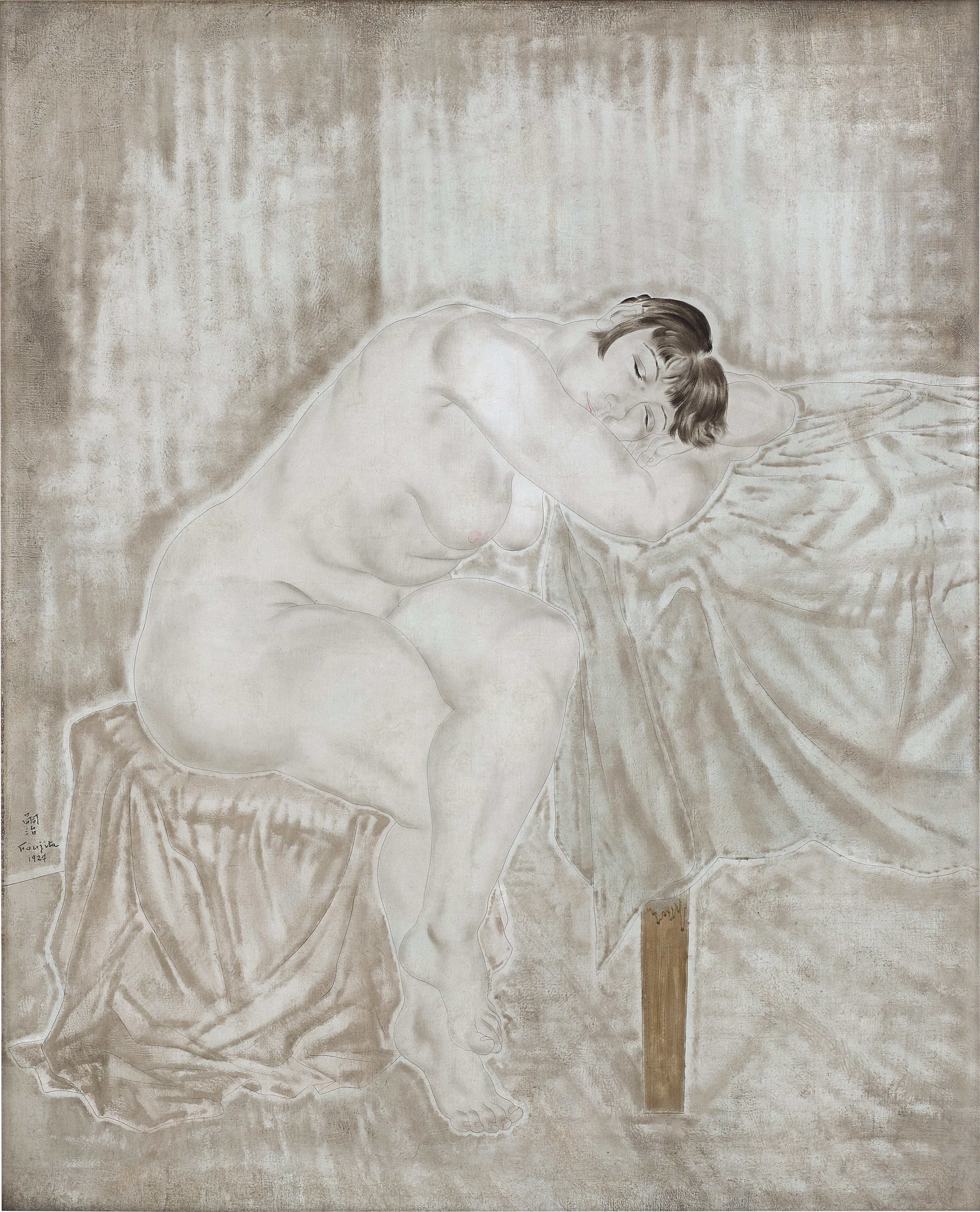
The museum also secured Nu assoupi sur la table (1927) for HK$6.5 million ($828,864) at the hammer and HK$8.3 million ($1 million) with fees—over 24 times its 2014 auction price. The third top lot, Chatte et chaton (1932), fetched HK$5.76 million ($734,501), double its 2016 price.
Beyond the Western Blue-chip Names
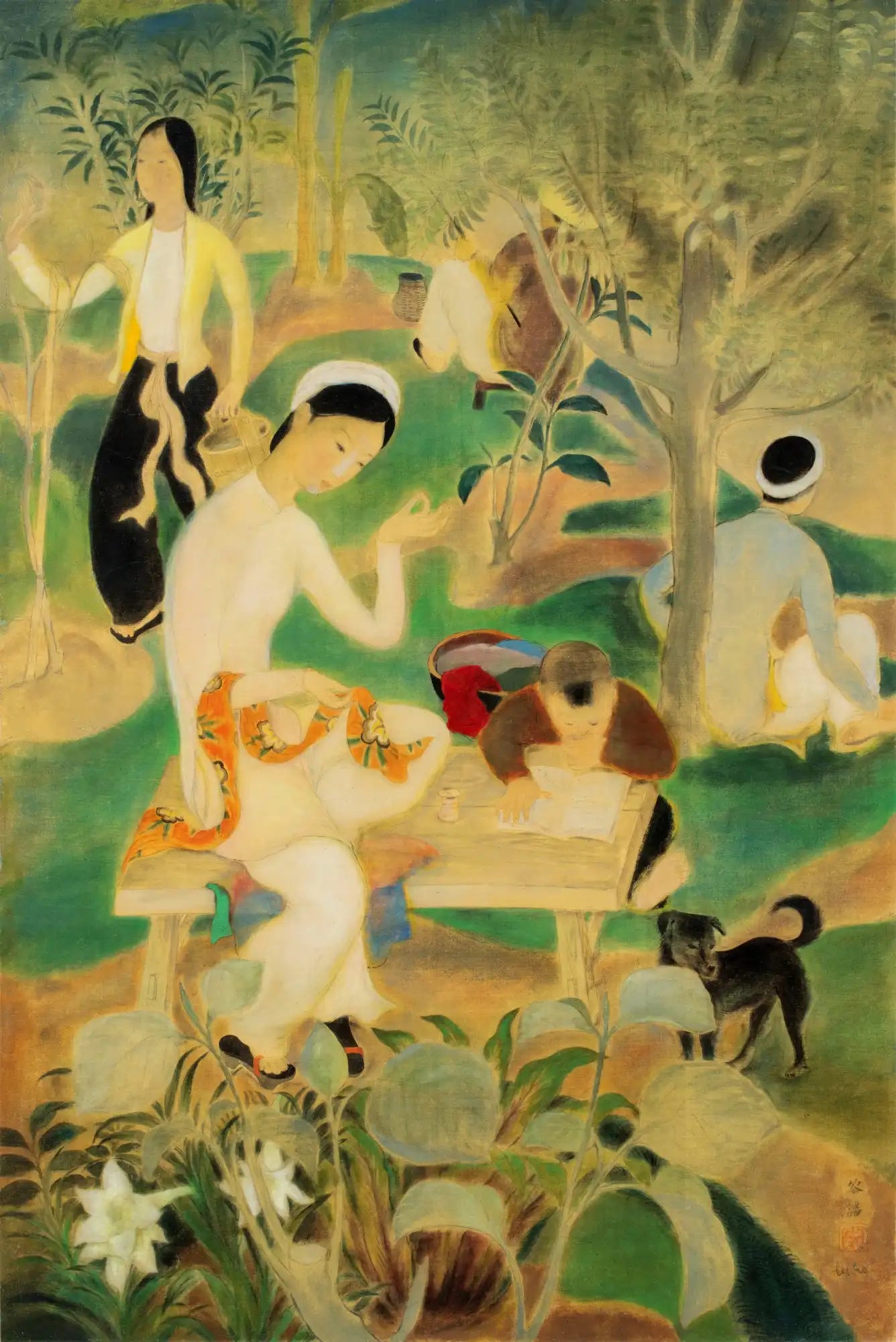
The results mirror growing institutional and commercial interest in Asian modernist pioneers in Europe. Last year, National Gallery Singapore staged “City of Others: Asian Artists in Paris, 1920s–1940s,” tracing figures like Sanyu, Georgette Chen, and Lê Phổ alongside Foujita.
Could the solid results of the Foujita sale inspire the market to revisit this group of artists who also occupy a space in both Asian and Western art histories?
Sanyu’s market surged pre-pandemic when Five Nudes (1950–59) set an artist record of HK$303.9 million ($38.7 million) at Christie’s Hong Kong in 2019. Records for Georgette Chen (HK$14.29 million/$1.8 million) and Lê Phổ (HK$18.6 million/$2.36 million) both reached new highs in 2023.
Ultimately, while Sanyu, Chen, and Lê Phổ have solidified their status among regional art connoisseurs, Foujita’s unique positioning allows him to bridge two distinct market segments.
“Foujita may appeal to an additional group of collectors who are specifically interested in artists that connect Asian art history with the Western canon,” said Gladys Lin. “For Asian collectors, there is growing interest in artists who connect back to an Asian cultural context while maintaining an established place within the international canon.”